The Kentucky Derby
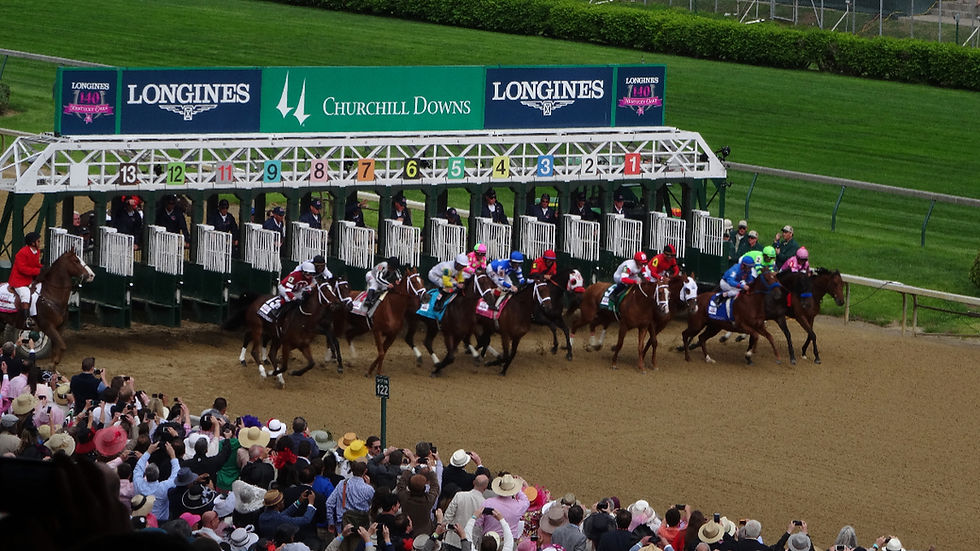
Every year on the first Saturday in May, the world turns its attention to the Kentucky Derby, widely known as the “Most Exciting Two Minutes in Sports". But, while the race itself lasts just two minutes, the celebration surrounding it spans an entire week. From charity galas to community events, the Derby is more than a horse race, it’s a cultural tradition woven into American history.
A Legacy That Began in 1875
The first Kentucky Derby was held in 1875 before a crowd of 10,000 spectators. Fifteen horses competed in a 1.5-mile race, where jockey Oliver Lewis rode Aristides to victory. Just eight years later, in 1883, the name “Churchill Downs” was officially used to describe the racetrack. By 1896, the race distance was shortened to its current 1¼ miles. In 1931, the Derby was permanently scheduled for the first Saturday in May, a tradition that continues today.
Despite the many hardships the world has faced over the years, the Derby never wavered from tradition. It ran through the Great Depression, drew 65,000 fans despite World War II travel restrictions in 1943, and became nationally broadcast in 1952, reaching an estimated 10-15 million viewers. More recently, in 2020, the Derby was postponed until September and ran without fans for the first time in history, a powerful reminder of how rare it is for this tradition to pause.
History was made in 1970 when Diane Crump became the first female jockey to compete in the Derby. Although she finished 15th, she was a trailblazer for women in horse racing. Three years later, Secretariat delivered a legendary performance, winning the 99th Derby in a record-setting 1:59.40 and becoming the first Triple Crown winner in 25 years. As the longest continuously held sporting event in America, the Kentucky Derby stands as one of the most prestigious horse races in the world.
Traditions That Define the Derby
Part of what makes the Kentucky Derby so special is the traditions that have endured for generations.
The Garland of Roses
Since 1896, the winning horse has been draped in a stunning garland of red roses, earning the Derby its nickname, “Run for the Roses". Today, the 40-pound garland is handcrafted with hundreds of roses and features the Kentucky state seal and the iconic Twin Spires.
The Twin Spires
Built in 1895 for $42,000 as part of a new grandstand design, the 55-foot-tall Twin Spires were originally added for aesthetic flair. Over 130 years later, they remain the most recognizable landmark in horse racing and a symbol of Churchill Downs itself.
The Mint Julep
Since 1938, the mint julep has been the Derby’s official drink. Representing southern hospitality and leisure, nearly 120,000 juleps are served each year. For those looking to give back, the famous “Thousand Dollar Julep” raises money for charity.
The Trophy
Introduced in 1924 for the Derby’s 50th anniversary, the trophy is a rare prize in American sports, a solid 14-karat gold award. Topped with a horse-and-rider figure and featuring an 18-karat gold horseshoe (pointing upward for good luck since 1999), it takes over 2,000 hours to craft each year.
The Horses: Racing Toward History
Only 3-year-old thoroughbreds can compete in the Kentucky Derby. Horses qualify by earning points in designated prep races, with only the top 20 securing a coveted spot in the starting gate.
In 1919, Sir Barton became the first horse to win the Triple Crown, claiming victory in the Kentucky Derby, Preakness Stakes, and Belmont Stakes. Decades later, Secretariat etched his name into history with the fastest Derby time ever recorded and the first Triple Crown since Sir Barton.
Each year brings new contenders and new storylines. This year, Paladin is considered an early favorite after a strong winter performance, though the prep season is still unfolding. As any racing fan knows, odds can shift quickly in the weeks leading up to Derby Day.
Fashion: A Runway at the Racetrack
From the beginning, the Derby was designed to feel elegant and luxurious. Founder Colonel M. Lewis Clark Jr. envisioned an event reminiscent of European racing culture.
Fashion has evolved dramatically over the decades. In the late 1800s, women wore hoop skirts and corsets. By the early 1900s, narrow skirts limited their stride. The 1920s introduced rising hemlines and the end of restrictive undergarments. Fast forward to the 1970s, and fans embraced Zodiac t-shirts, platform sandals, and bellbottoms.
Today, Derby fashion is defined by bold self-expression, especially when it comes to hats. The “bigger the better” trend of the 1980s and 1990s still influences modern styles, though smaller fascinators inspired by British racing culture have also gained popularity. Whether classic or contemporary, Derby fashion remains one of the event’s most beloved traditions.

The Kentucky Derby is not just about who crosses the finish line first. It’s about tradition, resilience, community, and celebration. It’s about roses and gold trophies, mint juleps and magnificent hats. It’s about a sporting event that has withstood wars, economic crises, and even a global pandemic, yet still brings people together year after year.
When the horses burst from the gate this Saturday, they carry more than jockeys on their backs. They carry 150 years of history, pageantry, and pride. And for two unforgettable minutes, the world watches together.
Source: https://www.kentuckyderby.com/
Be Well, Auburn.


